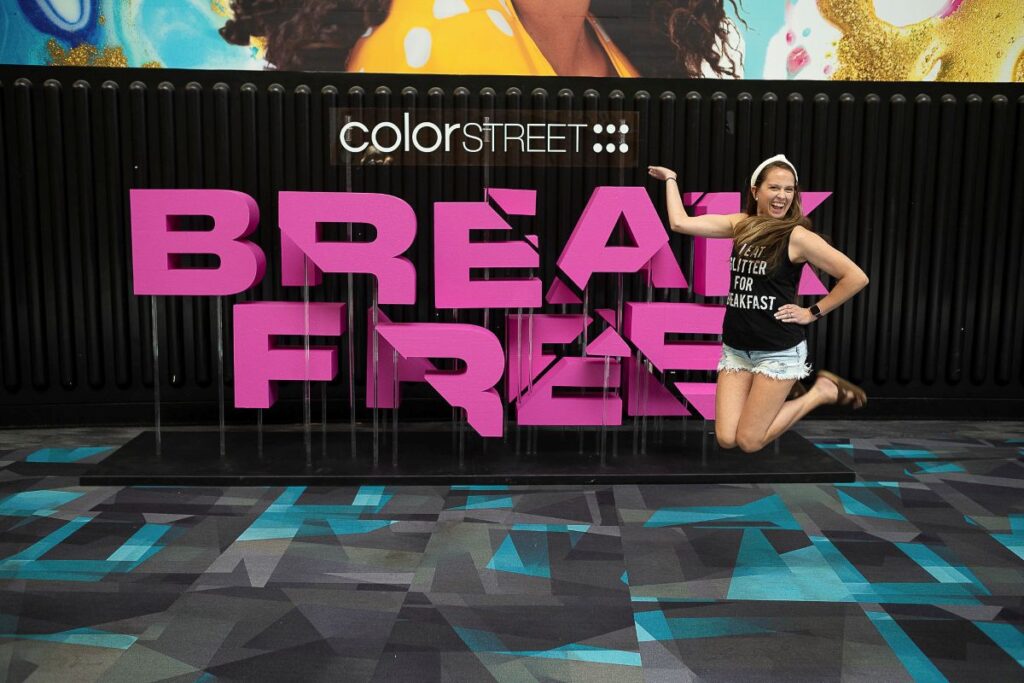
Event ROI: Activation Strategy That Converts — From Concept to Measurable ROI
An event activation strategy earns its place in the budget the moment it can prove what it produced, a traceable line from the moment someone walked into the room to the behavior they carried out of it. Attendance and applause are easy to count and don’t tell you much on their own. This page is built around the harder standard, and it’s the standard the rest of this guide will show you how to hit.
The Short Version
- Event activation strategy only earns its budget when it points to a specific behavior change, not attendance or applause.
- Measurement has to start in the brief, not the post-event recap, or the data needed later never gets captured in the first place.
- Ansera runs every activation through four repeatable stages: concept, design, execution, and measurement.
- Investment pays off most when it’s concentrated, in engagement, experiential moments, and interactivity, rather than spread evenly across a floor plan.
- ROI can be measured in three tiers, from same-day participation data up to neurologic-level synchrony.
What Is Event Activation Strategy, and Why Measurable Is the Word That Matters
Event activation is the work of turning a concept into a live, physical, felt experience that moves an audience toward a specific business outcome. That’s the whole definition. Where most activation strategy conversations go wrong is in what comes after: they stop at the experience and never finish the sentence.
The term gets used interchangeably with a handful of adjacent ones, and the differences matter for anyone building a budget around it:
- Activation versus production. Production is the physical build: staging, technical direction, on-site delivery. Activation is the layer of intent sitting above it, deciding what the production is supposed to accomplish.
- Activation versus experiential marketing. Experiential marketing is the broader discipline of building brand experiences. Activation is a specific instance of it, usually tied to a single event, launch, or moment.
- Activation versus a promotion. A promotion moves product. An activation strategy is built to move a relationship, a perception, or a behavior, and product movement is one possible downstream result.
Activation as a Business Investment
A strong brand activation strategy earns its budget through behavior it can point to after the fact:
- A qualified conversation started on the floor
- A follow-up meeting booked before the badge came off
- A measurable change in how a prospect describes your brand
- A team of stakeholders who saw the same proof point and left aligned
The Word “Measurable” Changes the Brief
Add “measurable” to an activation strategy and the entire planning conversation moves earlier. Instead of asking what people will remember, the brief has to answer what will be tracked, when, and against what baseline. That’s the change this page walks through end to end.
Why Most Activation Strategies Fail to Prove Event ROI
The distance between a “great event” and an event that moved the business almost always comes down to measurement, and the problem starts before the first vendor call.
The Common Measurement Mistakes
- Vanity metrics stand in for business metrics. Attendance, foot traffic, and social impressions describe reach. They stop well short of telling you whether the right person left with the right next step.
- Measurement gets bolted on after the fact. A post-event survey written the week after the show can’t recover data nobody thought to capture in the room.
- Satisfaction gets confused with outcome. A person can love the booth, the swag, and the keynote and still leave without a single next step booked.
- No baseline means no proof. Without a “before,” there’s no way to show the size of the “after.”
What a Provable Activation Strategy Requires Instead
A brand activation strategy that can prove ROI answers three questions before the first sketch: What behavior needs to change? What gets measured, and when? What counts as proof, versus what only feels like proof?
A Quick Diagnostic
Run any planned activation against these four questions before locking the brief. A “no” on any of them means the measurement plan needs work before the design does.
- Is there a single, named behavior this activation is meant to change?
- Is there a baseline captured before the event, to measure against afterward?
- Is at least one measurement checkpoint built into the run-of-show itself, ahead of the post-event survey?
- Does someone on the team own the measurement plan the same way someone owns the creative concept?
The Ansera Approach to ROI-Driven Activation
Every activation strategy Ansera builds runs through the same repeatable process, so measurement is never an afterthought:
Concept
Define the single behavior the activation needs to change, and the single moment the audience should remember. Everything downstream gets built to serve that one target, which means a strong concept stage ends with a one-sentence answer to “what should someone do differently after this,” not a mood board.
Design
Map the experience segment by segment, naming the emotional intent, the connection moment, and the proof point for each one. This is where the production team and creative strategists work from the same brief, so nothing gets designed in isolation.
Sociologist Randall Collins identified four conditions that have to be present for a group of individuals to feel and act like a connected group (Collins, Interaction Ritual Chains, Princeton University Press, 2004), and Ansera’s design stage is built around engineering all four on purpose:
- Bodily co-presence: people close enough, physically, that they register each other’s energy. Oversized rooms and hybrid formats work against this before anything else can succeed.
- A boundary that defines “us”: a clear, marked sense of who belongs to this moment, whether that’s a wristband, a shared phrase, or a threshold to cross.
- Mutual focus of attention: everyone attending to the same thing at the same time, in a way that prompts a shared response rather than passive viewing.
- A shared emotional mood: the room in roughly the same emotional state, engineered through music, lighting, and pacing rather than left to chance.
Execution
Bring the design into the room without losing the intent behind it. This is where a well-scoped audience engagement strategy does its heaviest lifting, giving a passive audience something active to do with their attention. Execution is also where most activation strategies drift furthest from the brief, since a live room full of variables tempts a team to improvise past the original behavior target.
Measurement
Capture proof at every stage of the process, from the earliest rehearsal through the weeks after the event ends. This step gets its own full breakdown later on this page, because it’s the one most activation strategies skip.
A Worked Example: One Activation, Start to Finish
The four stages read simply on paper. Here’s what they look like applied to a single, illustrative activation, a regional user conference booth for a mid-size enterprise software brand:
Concept
The target behavior: a booked product demo call within 30 days of the show, specific enough to rule out a lead scan or a swag bag photo as an acceptable substitute. Everything about the booth gets built to serve that one outcome.
Design
The floor plan gets sized down rather than up, so the demo area holds small clusters rather than a sprawling crowd (bodily co-presence). A colored wristband marks anyone who’s completed the initial product walkthrough, giving them visible standing to skip the line for a deeper session (a boundary that defines “us”). The live demo itself is timed to a single synchronized moment twice a day, rather than running on a loop, so the group watches the same reveal together (mutual focus). Lighting and a short audio cue mark the moment the product’s key feature activates on screen (shared mood).
Execution
A short gamified checklist walks each visitor through three stations before they reach the demo pod, turning a passive booth visit into a tracked sequence of small commitments. Staff are briefed to ask for the calendar booking on the spot, at the visitor’s highest point of engagement, rather than leaving it for a follow-up email.
Measurement
- Tier one, in the room: the checklist completion rate and the number of calendar bookings made live become the first data points, captured before the show floor closes.
- Tier two, the lagging proof: a two-week check-in tracks how many booked calls happened, and how many turned into a second conversation.
- Tier three, if the budget and the moment warrant it: synchronized physiological response during the timed demo reveal gives a read on whether the room felt the moment together in real time.
The specific booth and software brand are illustrative; the traceability is the actual point. Every design choice traces back to the one behavior named in the concept stage, and every measurement traces back to whether that behavior happened.
Where Activation Investment Pays Off Most
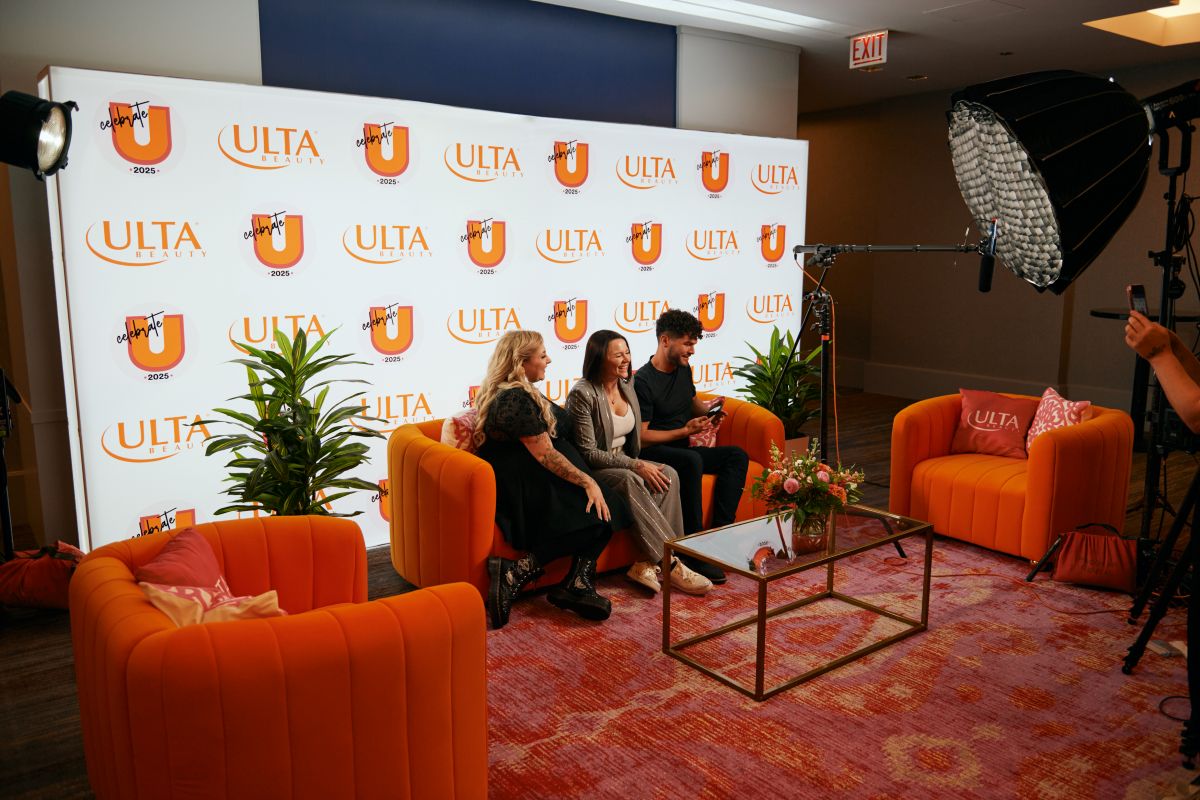
Not every dollar in an activation strategy earns the same return. These are the areas where the investment consistently shows up in the data:
Live Event Production
The physical execution: staging, technical direction, and on-site delivery. This is the layer most budgets are built around, and it’s also the layer where measurement gets forgotten first, since the team is busy running the room rather than capturing it. Get the live event production planning foundation right, with measurement checkpoints built into the run-of-show from the start, and every other lever in this list works harder because the data underneath it is trustworthy.
Audience Engagement and Gamification
Passive attendees generate passive data: an attendance count and not much else. An inclusive engagement and gamification layer gives people a reason to participate, whether that’s a structured activity, a point system, or a shared challenge, and participation itself becomes the first, easiest data point in the measurement plan. This is often the single highest-leverage investment on the list, since it improves both the experience and the proof of the experience at the same time.
Experiential and Immersive Formats
Experiential marketing and brand experience design creates the sensory, memorable moments that a slide deck or a booth backdrop can’t. Memory is what gets carried out of the room, and memory is what eventually gets measured, whether through a follow-up survey, a renewed conversation weeks later, or a stakeholder who can describe the moment in specific, vivid detail months on.
Interactive and Immersive Formats
Interactive and immersive activation formats give attendees something to do with their hands and their attention, which raises both engagement and the amount of usable data captured in the room. A touchscreen kiosk, a live poll, or a hands-on demo all generate a timestamped record of who engaged and how, a granular signal a post-event survey can’t reconstruct after the fact.
High-Impact Design Choices
Investment doesn’t have to mean the biggest footprint. High-impact activation design choices concentrate resources on the two or three moments that move the needle most, rather than spreading them evenly across a floor plan. A single, well-designed peak moment, properly measured, produces more usable proof than an entire floor of evenly funded, unmeasured touchpoints.
Beyond the Trade Show Floor
A trade show booth is one format among many, and treating activation strategy as synonymous with “booth” caps what it can return. Ansera works as a full-service event marketing partner across brand launches, internal events, expo floors, and hybrid formats alike, which means the same measurement discipline can apply anywhere an audience gathers.
How to Measure Activation ROI
This is the section most activation strategies skip, and the one that determines whether everything above this point was worth building. Measurement works in three tiers, moving from what any team can track immediately to what only a small number ever attempt:
Tier One: What Anyone Can Track by Monday
This tier needs no special tools, only a plan made in advance.
- Participation rate: who engaged versus who stood back, tracked by activity rather than badge scan alone
- Follow-up commitments captured live, in the room, ideally written down by the attendee rather than promised verbally
- A quick pre- and post-activation pulse check, using the same one or two questions before and after so the two readings are directly comparable
Tier Two: The Lagging Proof
This tier requires patience, since the real signal shows up after the room has emptied out.
- A “still in touch” or “still engaged” check-in at two to four weeks out, timed to when the initial excitement has worn off and only genuine follow-through remains
- Post-event signals: new connections made, contacts saved, content shared, or a scheduled follow-up meeting that gets kept
Tier Three: The Neurologic Layer
This tier requires equipment and expertise, and it’s the one most activation strategies never attempt, which is exactly why it produces the strongest proof when a client needs it.
- Neurologic and physiological coherence measurement during key moments, capturing how a room responds in real time rather than how it remembers responding
- Synchrony measured live, in real time, rather than reconstructed from a survey afterward, since a room’s collective response is a physical event before it’s a remembered one
The mechanism behind this tier is grounded in Ansera’s own neuroscience-backed engagement research, which covers the studies behind synchrony and group bonding in full.
According to EventsAir’s State of Events 2026 report, 74% of event professionals rate attendee engagement as a key factor in event success, while 39% also name it among their biggest challenges. Engagement is both the clearest proof point of success and one of the hardest problems to solve.
When the Plan Changes, the Approach Doesn’t
iSolved Connect: Rebuilding a Live Conference as a Virtual Experience Overnight
iSolved’s annual Connect Conference was built as a live gathering in Orlando, meant to bring customers together for product updates and momentum for the year ahead. When a hurricane forced an immediate pivot, the Ansera team led a rapid transformation into a fully virtual experience. Within hours, the event was reimagined as a studio-based production with remote presenters, restructured sessions, and a branded digital platform, preserving connection, clarity, and continuity throughout. See the full iSolved Connect case study.
This is what durability looks like: a process built around concept, design, execution, and measurement holds together even when every logistic changes at once.
Questions Worth Asking
What is event activation strategy?
It’s the planning discipline that turns a concept into a live experience built to change a specific audience behavior. The strategy part is the plan for measuring whether it worked.
How do you measure event marketing ROI?
Track in three tiers: immediate signals like participation and follow-up commitments, lagging signals like renewed contact weeks later, and, for the deepest read, neurologic and physiological measurement during key moments.
What’s the difference between event activation and event production?
Production is the physical build and technical delivery. Activation strategy is the layer above it, deciding what behavior the production needs to drive and how that behavior gets proven.
Does a bigger budget guarantee a stronger ROI?
A concentrated, well-measured activation strategy on a modest footprint regularly outperforms a large one built without a measurement plan.
What Ansera Brings to Every Activation
Everything on this page runs through the same capabilities on the ground: live event production for the physical build, and virtual and hybrid events for audiences that can’t all be in the same room. A provable activation strategy needs a team built to execute and measure it end to end.
The next step is a working conversation: bring a specific event or campaign, and leave with a first pass at the behavior it should change and how that change gets measured.
Awe starts here. Let’s Talk →
While You’re Here