The Neuroscience of Why Some Rooms Come Alive (And Most Don’t)
Event experience design is the difference between a room that comes alive and one that doesn’t. Here’s what what looks like in practice:
We ended our session at MPI WEC with a sober dance party.
Not as a joke. Not as a team-building exercise. As a demonstration of a concept that Dr. Paul J. Zak — neuroscientist, professor at Claremont Graduate University, and one of the leading researchers on the biology of human connection — calls collective effervescence.
The room moved. Together. And something shifted.
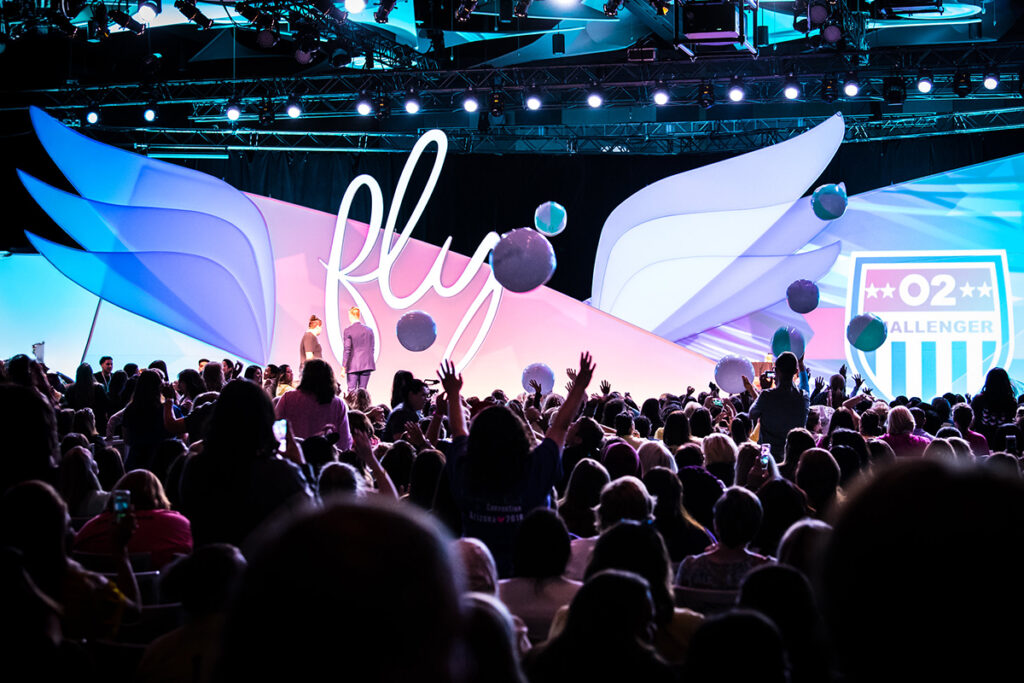
If you’ve ever been in a room that felt electric — a concert where the crowd became one thing, a ceremony where strangers wept alongside each other, an event where the energy was so palpable you could feel it in your chest — you’ve experienced collective effervescence. What you probably didn’t know is that it isn’t accidental. It’s neurological. And it’s designable.
The Short Version
- Collective effervescence is the physiological state that makes a room feel electric — and it can be designed deliberately.
- When people move, breathe, and feel together, oxytocin floods the system, heart rates synchronize, and the sense of individual self temporarily recedes.
- Three conditions produce it: synchronized movement, shared focus, and emotional entrainment.
- Phone use, forced enthusiasm, and undesigned transitions actively suppress the collective state.
- The first ten minutes of any gathering are the highest-leverage opportunity in event experience design.
What Collective Effervescence Actually Is
The term was coined by sociologist Emile Durkheim in the early 20th century to describe the heightened sense of energy and connection that emerges when people gather in shared ritual. Dr. Zak’s research has since identified the biological substrate: when people move, breathe, and feel together in synchronized ways, oxytocin — the neurochemical most associated with trust and bonding — floods the system.
The result isn’t just a feeling. It’s a physiological state. Heart rates synchronize. Cortisol drops. The sense of individual self temporarily recedes and is replaced by a sense of belonging to something larger. People in this state are more open, more trusting, more present, and — critically for event professionals — more likely to remember what they experienced.
“When people move, breathe, and feel together, oxytocin floods the system. The result isn’t just a feeling — it’s a physiological state.”
The Conditions That Produce It
Collective effervescence doesn’t happen by accident — but it also doesn’t require a concert venue or a pyrotechnics budget. Dr. Zak’s research points to three primary conditions:
Synchronized movement
When bodies move together — even subtly, even without choreography — oxytocin release increases. This is why crowds that clap in unison feel more bonded than crowds that don’t. It’s why a well-timed audience participation moment can shift the entire energy of a room. Movement doesn’t need to be dramatic. It needs to be shared.
Shared focus
Collective effervescence requires that people’s attention converge on the same thing at the same moment. Distraction is the enemy. This is why phone use during events suppresses the collective state — even one person with a glowing screen in their peripheral vision is a reminder that the room is made of individuals, not a shared experience.
Emotional entrainment
When one person in a room experiences a strong emotion — joy, awe, grief — mirror neurons make it contagious. But only if the environment creates permission for it. Rooms that feel formal or transactional suppress emotional contagion. Rooms designed for presence — the goal of any intentional event experience design — amplify it.
What This Means for Event Experience Design
Collective effervescence is not a keynote strategy or a session format. It’s an environmental condition — and it has to be designed from the beginning of the event experience, not retrofitted into an agenda.
A few implications:
- The first ten minutes of any gathering are the highest-leverage design opportunity you have. The collective state is easiest to create before individual identity reasserts itself — before people have categorized the experience, found their seats, and settled into their own mental worlds.
- Transitions between agenda items are where collective state is most likely to collapse. Undesigned transitions — the moment of silence while the presenter advances a slide, the awkward pause before the next speaker takes the stage — snap the room back into individual experience.
- Shared physical experience accelerates collective state faster than shared intellectual experience. This is why the sober dance party at WEC wasn’t a gimmick — it was the fastest possible demonstration of a principle that would have taken fifteen minutes to explain.
- You cannot manufacture collective effervescence with forced enthusiasm. High-energy music, forced applause, manufactured hype — these suppress the authentic state rather than producing it. The conditions have to be real.
The Room You’re Trying to Build
Every event professional has experienced a moment when a room came alive. When the energy became something you could feel, not just observe. When people who didn’t know each other an hour ago were laughing, moving, or sitting in silence together like something real had happened between them.
That moment isn’t luck. It’s the result of live event production conditions that were designed — deliberately or accidentally — to produce a shared physiological state. That’s what event experience design makes possible.
Understanding the mechanism means you can build it on purpose. Every time.
Get the full Collective Effervescence session resources and frameworks from MPI WEC.
→ Download the MPI Session Resources
EJ Corporan is Director of Marketing & Research at Ansera, where he leads experience strategy, thought leadership, and the Science of Awe research platform.
While You’re Here
What Your Attendees’ Heart Patterns Can Tell You About Your Event Design
Why Large-Scale Event Networking Fails (And a Framework to Fix It)